In my last post covering self-driving labs, I focused on the question of how research can make these systems faster without sacrificing reliability, transparency and, most importantly, human judgement. Today, I wanted to change gears and focus on the question of who is actually working to turn these ideas into reality. One of the most influential researchers answering that question is Alán Aspuru-Guzik.
Image taken from the University of Toronto, credited to Chris Sorenson
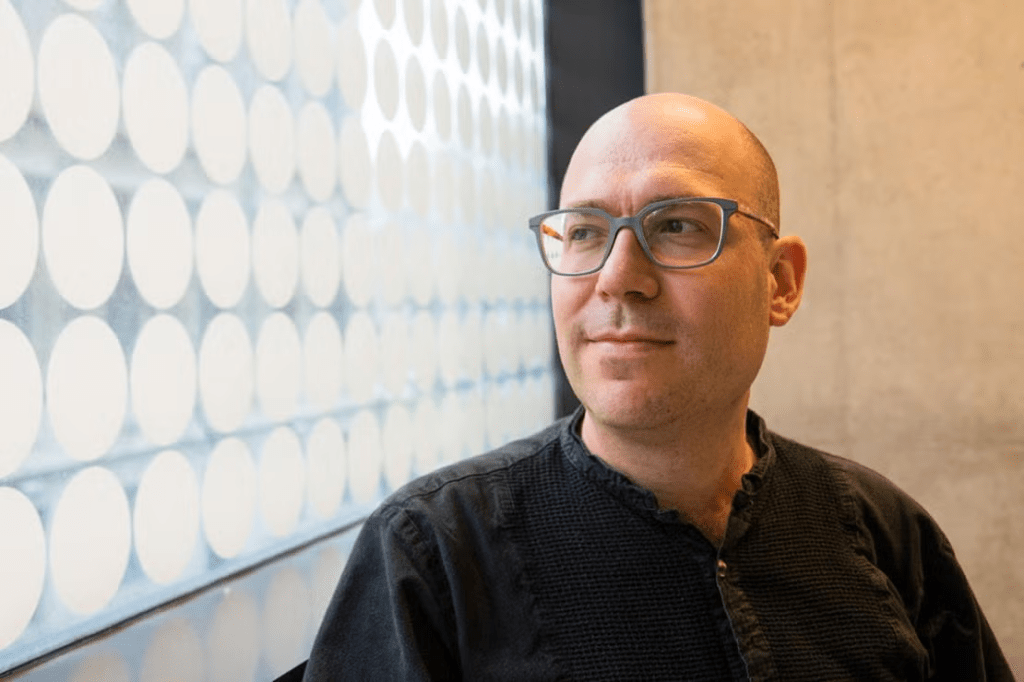
Aspuru-Guzik is a professor of chemistry and computer science at the University of Toronto. By combining his passion for chemistry with his know-how for AI, robotics, and materials science, he has become one of the pioneering scientists in the use of self-driving laboratories. He has also become a vocal advocate for their widespread adoption by fellow scientists, arguing in a recent interview that other scientists are not taking full advantage of automation in making experimental decisions.
In an earlier post, I explained how self-driving laboratories operate through a repeated cycle in which an algorithm selects an experiment, robotic equipment performs it, and the data from that experiment is returned to the algorithm to select the next experiment. As it turns out, Aspuru-Guzik was one of the earliest researchers to outline this vision for how self-driving labs could operate way back in a 2019 research article, explaining how scientists could reduce repetitive work by adopting these self-driving systems. Aspuru-Guzik has gone from merely predicting what these laboratories would look like seven years ago to testing these ideas on real materials problems in the present.
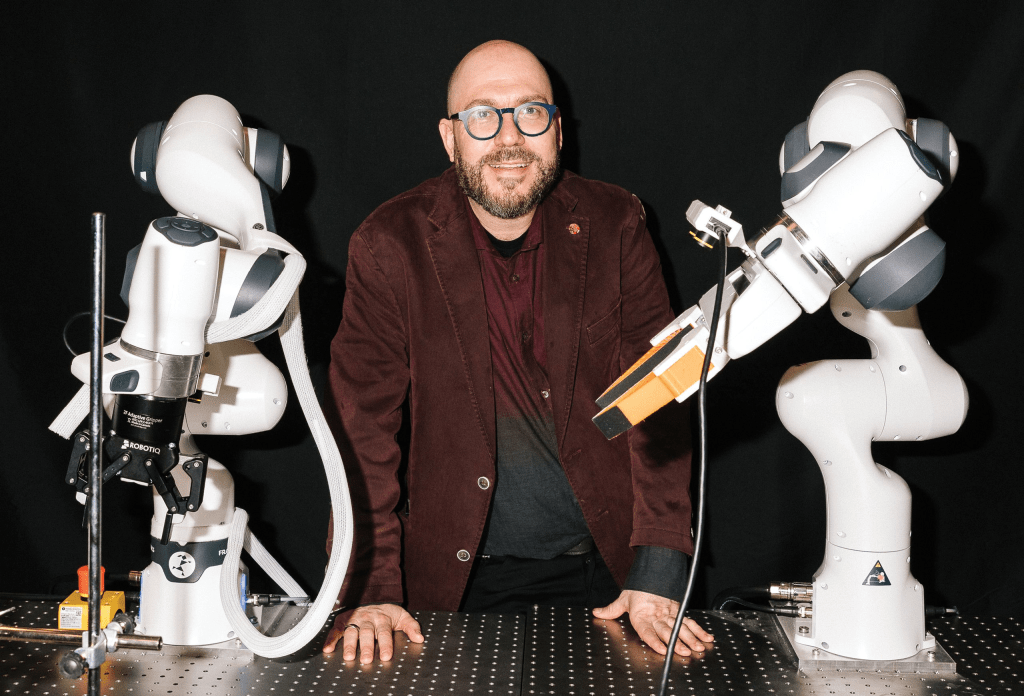
Image taken from Toronto Life, credited to Aaron Wynia
One of the clearest examples of this, which I was particularly impressed with, came from a 2024 study in the journal Science in which Aspuru-Guzik and other researchers connected five laboratories across three continents through a cloud-based AI system. Each of these labs then used its own specialized equipment to simultaneously test different materials seen as candidates for organic laser materials before communicating this data to the other labs instantaneously. What made this research so exciting and promising was that each lab could contribute to the project whenever its equipment was available since these labs didn’t need to operate simultaneously.
Not only did this process prove efficient, but it also proved fruitful, with the project discovering twenty-one serious contenders for use as organic laser materials. However, and more importantly, it demonstrated that self-driving labs allow for similar research efforts to be conducted simultaneously, despite being separated geographically. As such, this project serves as an exciting proof-of-concept for an international network in which researchers, robots, instruments, and data can work together to speed up research efforts.
The study also demonstrates how Aspuru-Guzik communicates his work. Rather than simply detailing the results of the project in the research paper, he and the other researchers carefully explain how the system operated, describe the challenges they encountered, and provide enough detail for other scientists, as well as layman like me, to interpret the results and their implications.
The outreach and advocacy efforts of Aspuru-Guzik and others like him represent the kind of transparency and clarity in communication that I think is especially important as self-driving laboratories become more widely used.
 Ashton Petersen
Leave a comment